
Learning Is Never Culturally Neutral: What Jin Li Helps Us See


A student stays after class rewriting an already excellent essay—not for extra credit, but because it “could be better.” Another confidently raises their hand after only partial understanding, eager to test an idea aloud. One learner sees effort as the pathway to mastery; another sees confidence as proof of ability.
Teachers witness these differences every day, yet schools often interpret them through a single cultural lens.
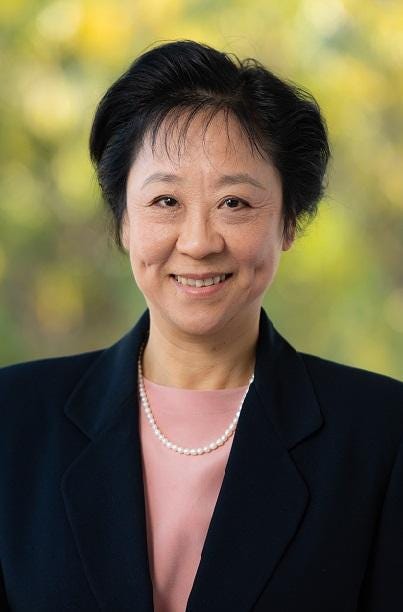
Dr. Jin Li has spent decades helping us understand that beliefs about learning are never universal. They are cultural, relational, and deeply tied to identity.
Her work reminds us that motivation itself has a cultural history.
The Stories We Learn About Learning
For many Western educational systems, learning is often framed around individuality, self-expression, creativity, and personal confidence. Achievement is frequently associated with talent, innovation, or visible participation.
But Jin Li’s research complicates that narrative.
Drawing from cross-cultural psychology and educational research, Li has shown that many Eastern learning traditions conceptualize achievement differently—not as the performance of innate ability, but as the moral and relational outcome of persistence, humility, effort, and self-cultivation (Li, 2012).
This distinction matters profoundly in classrooms.
A learner who hesitates before speaking may not lack confidence. A student who repeatedly revises their work may not be perfectionistic. A child who avoids public praise may not lack motivation.
They may simply be navigating a different cultural pathway of learning.
As sociocultural theorists have long argued, cognition develops within cultural systems of meaning, expectation, and relationship (Vygotsky, 1978; Bronfenbrenner & Morris, 2006). Jin Li extends this understanding by revealing how culture shapes not only what we learn, but what learning itself is believed to mean.
The Hidden Story Beneath Achievement
In many Western frameworks, struggle is often interpreted as a temporary obstacle on the way to competence.
But in many East Asian traditions studied by Li, effort itself becomes a moral practice—a reflection of responsibility, respect, and commitment to growth.
This changes how learners experience school.
One student may ask:
“Am I smart?”
Another may ask:
“Am I working hard enough to honor this opportunity?”
Both are achievement beliefs.
But they produce very different emotional worlds.
Li’s work helps educators recognize that classrooms are never culturally neutral spaces. Participation, persistence, humility, questioning, and even motivation itself carry different meanings across cultural contexts.
And when schools interpret all learners through a single developmental lens, misunderstandings emerge.
The Cultural Shape of Achievement
At Spiral We, we often describe development as ecological and recursive rather than linear or universal.
Jin Li’s work aligns naturally with this perspective.
Learning beliefs do not emerge in isolation. They spiral through families, communities, histories, relationships, and cultural narratives. Identity and cognition evolve together.
A learner raised in a culture emphasizing collective responsibility may experience achievement very differently than a learner raised within highly individualistic systems. Neither orientation is inherently superior—but both shape how students interpret effort, failure, recognition, and belonging.
This is especially important when educators encounter asynchronous development.
A learner may demonstrate extraordinary persistence while struggling with public participation. Another may appear highly verbally confident while avoiding sustained challenge. Without cultural context, teachers may misread both students entirely.
As culturally responsive scholars have argued, learning is always mediated by identity, culture, and power (Gay, 2018; Ladson-Billings, 1995).
As Nel Noddings (1984) argued, learning emerges most powerfully within relationships of care, trust, and recognition.
Through the Spiral Adaptation Lens, these moments become opportunities for interpretation rather than judgment. Behavior becomes communication shaped by developmental, relational, and cultural context.
The question shifts from:
“Why isn’t this learner engaging correctly?”
to:
“What vision of learning is this student carrying into the room?”
The Educator Mirror
Most educators were themselves shaped by hidden cultural narratives about achievement.
Some of us learned that success meant standing out.
Others learned it meant persistence without recognition.
Some were taught to speak quickly.
Others were taught to listen carefully before contributing.
These beliefs do not disappear when we become teachers.
They become the invisible architecture through which we interpret students.
Jin Li’s work invites educators into a deeper kind of reflection:
What assumptions about intelligence, effort, confidence, or participation am I carrying unconsciously into my classroom?
Because often, what we label as disengagement, passivity, perfectionism, or lack of confidence may actually be cultural expressions of learning, respect, or belonging.
What Changes When We See This Differently
Jin Li’s work invites us to approach motivation and achievement with greater cultural humility:
Observe patterns before making assumptions about engagement.
Distinguish confidence from competence.
Recognize that effort, persistence, and humility may carry different cultural meanings.
Ask what beliefs about learning are shaping a learner’s behavior.
Remember that participation does not always look the same across cultures.
Learning is never culturally neutral.
Neither is the classroom.
Call to Reflection
What beliefs about learning shaped you as a child?
Were you taught that intelligence was something you had—or something you cultivated?
If this reflection sparked something for you, share a moment when a learner’s motivation or participation made more sense after considering culture and identity more deeply.
When did understanding replace assumption?
When did cultural context change what you thought you were seeing?
References
Bronfenbrenner, U., & Morris, P. A. (2006). The bioecological model of human development.
Gay, G. (2018). Culturally responsive teaching: Theory, research, and practice.
Ladson-Billings, G. (1995). Toward a theory of culturally relevant pedagogy.
Li, J. (2012). Cultural foundations of learning: East and West.
Noddings, N. (1984). Caring: A feminine approach to ethics and moral education. University of California Press.
Vygotsky, L. S. (1978). Mind in Society. Harvard University Press.