
The Students We Understand Last


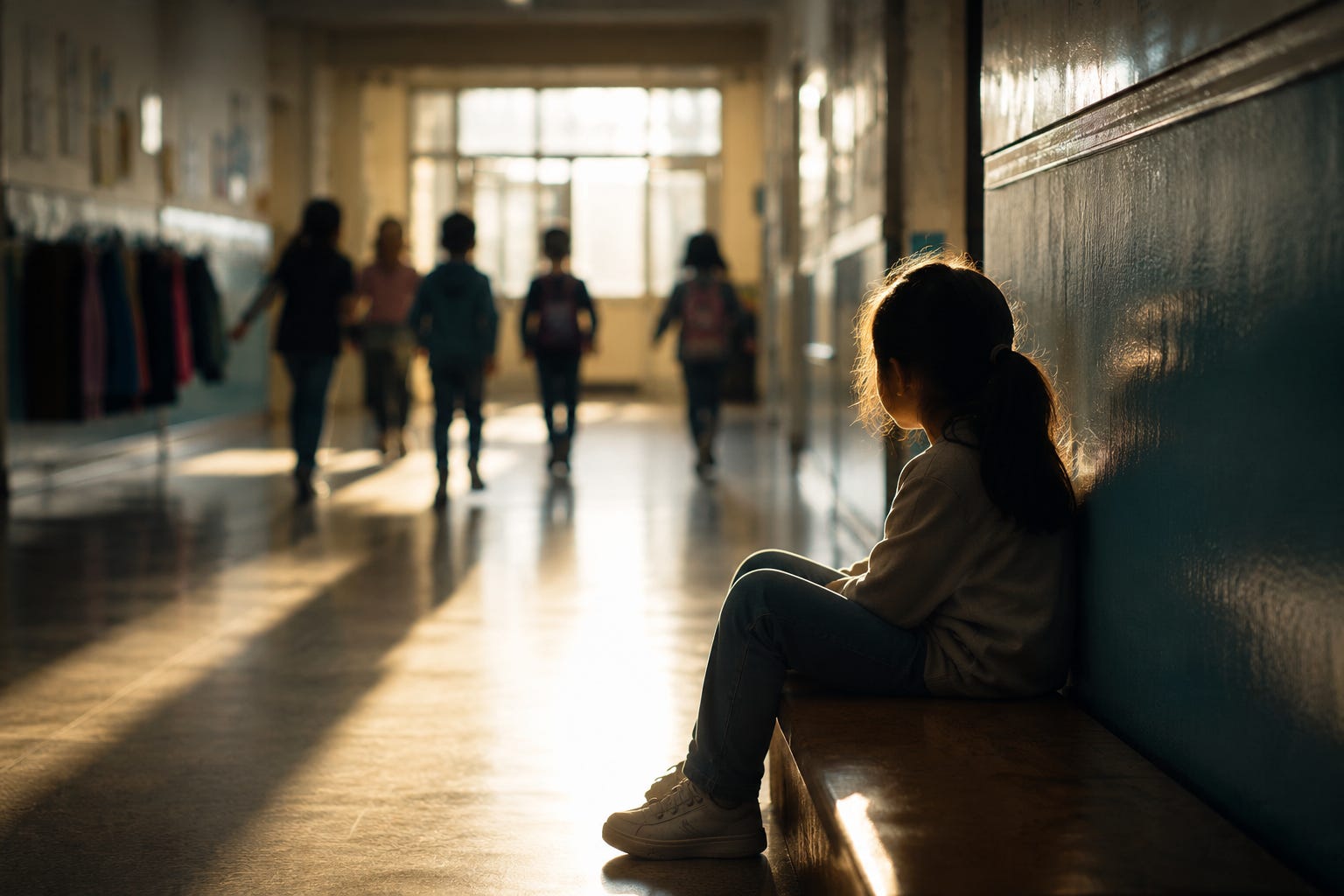
Some students make sense to us immediately.
They respond to school in recognizable ways. Their strengths are visible early on. Their emotions, communication styles, and learning patterns fit comfortably within the rhythms adults expect to see in classrooms. Teachers feel oriented around them almost instinctively. We understand how to interpret their participation, their effort, their confidence, and even their struggles.
And then there are the students who remain harder to read.
Not because they lack intelligence or depth, but because they move through the world in a way that does not align neatly with the interpretive systems schools rely upon to recognize competence.
Some learners reveal themselves slowly.
A child who rarely speaks during whole-group discussion later produces writing filled with startling perceptiveness. A student who appears inattentive remembers details no one else noticed. A learner initially perceived as resistant gradually becomes animated once trust develops. Another seems emotionally mature in conversation yet struggles profoundly with transitions, organization, or overwhelm.
These students often leave adults uncertain about what they are seeing and uncertainty is uncomfortable in educational systems built around rapid interpretation.
What Schools Learn to Recognize
Schools depend on legibility more than we often realize. Teachers make hundreds of interpretive decisions each day about engagement, understanding, motivation, emotional regulation, social development, and capability. In order for classrooms to function, adults rely on patterns that feel recognizable and predictable. Certain learners become easy to read because their behaviors align with institutional (or societal) expectations about what competence is supposed to look like.
But not all learners communicate understanding in ways schools easily recognize.
Multilingual learners may understand far more than they can immediately express. Neurodivergent learners may demonstrate insight inconsistently across environments. Gifted learners may appear highly advanced in one domain while remaining developmentally vulnerable in another. Students navigating trauma or chronic stress may expend so much energy maintaining regulation that they have nothing left for visible participation.
What complicates this further is that schools often reward not merely learning, but familiarity. Learners whose communication styles, pacing, emotional expression, or cultural behaviors resemble the culturally dominant expectations are more likely to be interpreted as capable early on. As sociologist Erving Goffman (1959) observed, social environments continuously shape how people become interpreted and understood by others. In classrooms, learners are not simply demonstrating knowledge; they are also navigating the visible and invisible expectations attached to competence, participation, and belonging. Students who fall outside those expectations are frequently required to provide more evidence of their competence before adults fully recognize it.
This does not happen because educators lack care.
It happens because human beings interpret through prior experience. We understand new people through frameworks shaped by our own histories, cultures, expectations, and institutional training. Educational systems do the same thing. They privilege certain forms of participation, certain expressions of confidence, certain relationships to authority, certain demonstrations of knowledge.
And learners whose development unfolds differently often become difficult to categorize within those structures.
One of the quietest truths in education is that some students are understood only after relationship deepens.
A teacher spends months interpreting a learner as disengaged before realizing the student was overwhelmed. A child initially perceived as oppositional is later recognized as anxious. A multilingual learner once viewed as passive reveals sophisticated conceptual understanding once linguistic demands shift. A gifted student labeled inconsistent begins making sense once adults recognize the reality of asynchronous development.
Often the learner did not fundamentally change at all.
What changed was the adult’s ability to perceive them accurately.
Time created context. Relationship revealed patterns that first impressions could not hold. Behaviors that once appeared contradictory began to form a coherent developmental picture.
This is one reason humility matters so deeply in teaching. As Nel Noddings (1984) argued, education begins not merely with instruction, but with relationship, attention, and care. To understand another learner fully requires more than evaluation; it requires sustained human presence.
Human beings are not immediately transparent to one another.
And learners whose culture, language, neurodevelopment, emotional regulation, or communication styles fall outside dominant expectations are often forced to wait the longest to be seen clearly.
The Learners We Read Most Incorrectly
There is also an emotional cost to being persistently misunderstood.
Over time, learners begin constructing identities around the interpretations placed upon them. The quiet learner becomes “unmotivated.” The emotionally overwhelmed learner becomes “difficult.” The asynchronous learner becomes “inconsistent.” The multilingual learner becomes “behind.” A child who requires context before participation may begin believing there is something fundamentally wrong with the way they think, regulate, or relate.
Long before schools shape achievement, they shape self-perception.
This is why developmental interpretation matters so profoundly. Educational environments do not simply evaluate learners; they participate in constructing the stories learners eventually tell about themselves.
And those stories often begin with the language adults use when trying to explain behavior they do not yet understand.
When educators shift from evaluating behavior to interpreting context, classrooms begin changing in subtle but important ways. Curiosity softens certainty. Observation becomes more relational. Difference becomes information rather than threat. Teachers begin asking not only whether a learner is meeting expectations, but how those expectations themselves shape what adults are able to recognize.
The question gradually shifts from:
“What is wrong with this learner?”
to:
“What might I still not understand about how this learner experiences the world?”
That question creates room for developmental patience.
Not lowered expectations. Not avoidance of accountability. But a deeper recognition that understanding another human being is rarely immediate. It unfolds through observation, relationship, reflection, and time.
And perhaps some of the students we understand last are not the least capable among us.
They are simply the learners who require us to become more perceptive human beings before we can finally see them clearly.
Call to Reflection
Who were the students you understood too late?
What learners became clearer only after relationship, trust, or developmental understanding changed the way you interpreted them?
And what might change in schools if we treated understanding not as immediate certainty, but as an ongoing human process of learning how to see one another more clearly?
References
Gay, G. (2018). Culturally responsive teaching: Theory, research, and practice.
Goffman, E. (1959). The presentation of self in everyday life. Doubleday.
Ladson-Billings, G. (1995). Toward a theory of culturally relevant pedagogy.
Noddings, N. (1984). Caring: A feminine approach to ethics and moral education. University of California Press.